How Apple’s App Store Connect Transforms App Development & Distribution
Apple’s App Store Connect isn’t just another developer dashboard—it’s the nerve center where apps are born, refined, and monetized. Behind every successful iOS application lies this platform, where developers submit builds, track performance, and engage with users without ever leaving a single interface. The system’s seamless integration with Xcode, TestFlight, and the App Store itself makes it indispensable, yet its full potential remains untapped by many.
What separates App Store Connect from generic app store portals is its depth. While competitors offer basic submission tools, Apple’s ecosystem provides granular control over pricing tiers, regional restrictions, and even beta testing workflows. The platform’s real-time analytics—dissecting downloads, crash reports, and revenue by territory—turns raw data into actionable insights. But mastery isn’t automatic; understanding its quirks—like the 90-day review window or the nuances of App Review Guidelines—can mean the difference between a smooth launch and a rejected submission.
For developers, the stakes are high. A misconfigured App Store Connect profile can delay updates, while overlooked metadata can bury an app in search results. Yet, despite its complexity, the platform evolves quietly, absorbing feedback from millions of developers to refine its functionality. Whether you’re a solo creator or a studio managing 100+ apps, the way you leverage App Store Connect directly impacts your app’s visibility, revenue, and long-term success.

The Complete Overview of App Store Connect
App Store Connect serves as the operational hub for iOS app lifecycle management, replacing older tools like iTunes Connect with a more streamlined, feature-rich interface. Launched alongside Apple’s shift toward unified developer accounts, it consolidates tasks that once required juggling between multiple platforms—from initial app registration to post-launch optimization. The platform’s design prioritizes efficiency, with drag-and-drop features for screenshots, automated beta distribution via TestFlight, and real-time revenue reporting broken down by app, country, and even payment method.
What sets App Store Connect apart is its tight coupling with Apple’s broader ecosystem. Developers can push builds directly from Xcode, monitor App Store performance metrics, and even manage in-app purchases without leaving the dashboard. The integration extends to customer support tools, where users can submit feedback that developers can triage within the same interface. This end-to-end workflow eliminates friction, but it also demands familiarity with Apple’s policies—such as the 30% App Store commission or the 90-day review cycle—to avoid costly missteps.
Historical Background and Evolution
The origins of App Store Connect trace back to Apple’s 2008 App Store launch, which initially relied on a rudimentary iTunes Connect system. Over a decade later, Apple recognized the need for a more sophisticated tool as the App Store grew into a $85 billion marketplace. The transition to App Store Connect in 2019 marked a pivotal shift, introducing a unified dashboard that replaced separate portals for apps, games, and in-app purchases. This consolidation wasn’t just about aesthetics; it reflected Apple’s growing emphasis on developer experience, particularly as competition from Google Play and third-party stores intensified.
Table of Contents
- The Complete Overview of App Store Connect
- Historical Background and Evolution
- Core Mechanisms: How It Works
- Key Benefits and Crucial Impact
- Major Advantages
- Comparative Analysis
- Future Trends and Innovations
- Conclusion
- Comprehensive FAQs
- Q: Can I use App Store Connect for macOS or tvOS apps?
- Q: How long does it take for changes to reflect on the App Store after updating metadata in App Store Connect ?
- Q: Are there any hidden fees for using App Store Connect beyond the standard $99/year developer fee?
- Q: Can I track user acquisition sources (e.g., ads, organic search) in App Store Connect ?
- Q: What happens if my app is rejected during the review process in App Store Connect ?
- Q: Does App Store Connect support automated app updates (e.g., over-the-air patches)?
Key milestones in its evolution include the introduction of App Clips in 2020 (a feature managed exclusively through App Store Connect), the expansion of subscription analytics, and the addition of tools for managing App Store product pages directly within the platform. Apple’s iterative updates—such as the 2021 rollout of detailed customer reviews and the 2022 integration of App Store Optimization (ASO) metrics—demonstrate a commitment to addressing pain points developers face. Yet, despite these improvements, the platform’s learning curve remains steep, particularly for those unfamiliar with Apple’s developer ecosystem.
Core Mechanisms: How It Works
At its core, App Store Connect operates as a centralized command center for app management, divided into six primary modules: My Apps, App Store, TestFlight, Revenue, Analytics, and Customers. The "My Apps" section is where developers register new apps, upload metadata (including keywords, descriptions, and preview videos), and configure pricing and availability by region. This is also where builds are submitted for review, with support for both manual uploads and automated pipelines via Xcode’s Archive feature.
The platform’s power lies in its real-time synchronization. For example, when a developer updates an app’s screenshot in App Store Connect, the change propagates instantly to the App Store product page. Similarly, revenue reports update nightly, providing granular insights into sales, refunds, and tax withholdings. TestFlight integration allows for seamless beta testing, with developers able to invite up to 10,000 external testers and monitor feedback without leaving the dashboard. However, the system’s complexity can overwhelm newcomers; a misconfigured app store listing or an overlooked beta tester limit can derail even the most polished app.
Key Benefits and Crucial Impact
App Store Connect isn’t just a tool—it’s a strategic asset for developers aiming to maximize visibility and revenue. Its ability to streamline workflows, from beta testing to post-launch analytics, reduces the overhead of managing an iOS app. For studios with multiple titles, the platform’s batch-processing capabilities (such as updating pricing across all apps simultaneously) save hundreds of hours annually. Even for solo developers, the integration with Xcode and TestFlight eliminates the need for third-party tools, lowering costs and simplifying collaboration.
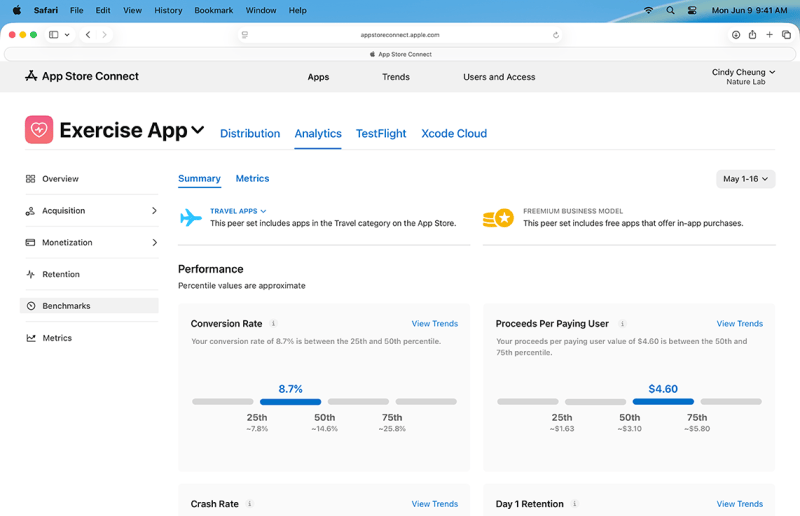
The platform’s true value lies in its data-driven approach. Unlike generic app store portals, App Store Connect provides actionable metrics, such as conversion rates by region or the performance of specific keywords in search results. This level of detail allows developers to refine their ASO strategies dynamically, adjusting metadata based on real-time trends. However, the benefits come with responsibility: neglecting to monitor these metrics can lead to stagnant downloads or missed revenue opportunities.
"App Store Connect has become the backbone of our global app distribution. The ability to manage 50+ apps from a single dashboard, while tracking revenue down to the country level, has cut our operational costs by 40%."
— Jane Carter, CTO of MobileDev Studios
Major Advantages
- Unified Workflow: Consolidates app submission, beta testing, and post-launch management into one interface, eliminating the need for multiple tools.
- Real-Time Analytics: Provides granular revenue, download, and crash report data, enabling data-driven optimization of app store listings and pricing.
- Seamless Beta Testing: TestFlight integration allows developers to distribute beta builds to up to 10,000 testers with minimal setup, streamlining feedback collection.
- Global Scalability: Supports regional pricing, tax configurations, and language localization, making it ideal for apps targeting multiple markets.
- Automated Compliance: Enforces Apple’s App Review Guidelines during submission, reducing rejection risks with built-in validation checks.

Comparative Analysis
While App Store Connect is the gold standard for iOS developers, alternatives exist—each with trade-offs. Google Play Console, for example, offers broader device fragmentation support but lacks Apple’s deep integration with Xcode. Third-party tools like Firebase App Distribution provide beta testing features but require additional setup for App Store submissions. Understanding these differences is critical for developers targeting both platforms or exploring hybrid distribution strategies.
| Feature | App Store Connect | Google Play Console |
|---|---|---|
| Primary Platform | iOS/macOS (Apple Ecosystem) | Android (Google Ecosystem) |
| Beta Testing Integration | TestFlight (up to 10,000 testers) | Google Play Beta (up to 100,000 testers) |
| Revenue Reporting Granularity | By app, country, payment method, and tax jurisdiction | By app, country, and payment processor |
| ASO Tools | Built-in keyword tracking and metadata management | Limited ASO features; relies on third-party tools |
Future Trends and Innovations
The next phase of App Store Connect will likely focus on AI-driven optimization and deeper integration with Apple’s emerging technologies. Rumors suggest upcoming features may include automated ASO recommendations, leveraging Apple’s vast user data to suggest high-performing keywords or pricing strategies. Additionally, as App Clips and Quick Actions gain traction, the platform may introduce dedicated tools for managing these micro-apps, further blurring the line between traditional apps and web experiences.
Another potential evolution is enhanced collaboration features, allowing teams to assign roles (e.g., "Marketing Lead" or "Tech Lead") with granular permissions within App Store Connect. Apple may also expand its analytics to include cross-app user behavior, helping developers identify opportunities for bundling or upselling. However, the biggest challenge will be balancing innovation with the platform’s existing complexity—ensuring new features don’t overwhelm developers already managing multiple apps.
Conclusion
App Store Connect is more than a submission portal—it’s the linchpin of iOS app success. Its ability to centralize workflows, provide actionable insights, and enforce Apple’s stringent standards makes it indispensable for developers serious about growth. Yet, its full potential is only realized by those who master its nuances, from navigating the App Review process to leveraging analytics for continuous improvement.
For developers, the key takeaway is this: App Store Connect is not a static tool but a dynamic ecosystem that evolves alongside Apple’s innovations. Staying ahead requires not just familiarity with its features but a proactive approach to testing, optimization, and adaptation. In an era where app store visibility is as competitive as ever, those who harness this platform effectively will be the ones who dominate the market.
Comprehensive FAQs
Q: Can I use App Store Connect for macOS or tvOS apps?
A: Yes. App Store Connect supports submissions for all Apple platforms, including iOS, macOS, tvOS, and watchOS. The dashboard consolidates management for all app types under a single developer account.
Q: How long does it take for changes to reflect on the App Store after updating metadata in App Store Connect?
A: Most metadata changes (e.g., screenshots, descriptions) update within 24 hours. However, pricing adjustments or new app submissions may take up to 48 hours to appear on the App Store due to Apple’s review process.
Q: Are there any hidden fees for using App Store Connect beyond the standard $99/year developer fee?
A: No. App Store Connect itself is free to use, and the only recurring cost is Apple’s developer program fee ($99/year for individuals, $299/year for companies). Additional costs may arise from third-party tools or premium support services.
Q: Can I track user acquisition sources (e.g., ads, organic search) in App Store Connect?
A: Indirectly. While App Store Connect doesn’t natively support UTM parameter tracking, you can use Apple Search Ads or third-party attribution tools (like Adjust or Branch) to log sources and correlate them with revenue data in the dashboard.
Q: What happens if my app is rejected during the review process in App Store Connect?
A: Apple provides a rejection reason in App Store Connect, along with guidance on how to fix the issue. You can resubmit the corrected build once the changes are made. Common reasons for rejection include guideline violations, performance issues, or missing metadata.
Q: Does App Store Connect support automated app updates (e.g., over-the-air patches)?
A: Yes. Developers can push minor updates (including bug fixes and content changes) directly through App Store Connect without requiring a full review cycle, provided the changes don’t alter the app’s core functionality or violate guidelines.
Leave a Comment
Comments are moderated before appearing. The data you submit is processed according to the Privacy Policy of Coolearth.