How Clip Studio Paint EX Transformed Digital Art Forever
For decades, digital artists have relied on tools that either sacrificed precision for accessibility or demanded exorbitant hardware investments. Then came Clip Studio Paint EX—a software that bridged the gap between amateur experimentation and studio-grade production. Unlike its predecessors, which treated animation and illustration as separate disciplines, Clip Studio Paint EX integrated them into a single, cohesive ecosystem. This wasn’t just an update; it was a paradigm shift for creators who demanded more than just brushes and layers. The software’s ability to handle everything from rough sketches to finalized comics, with built-in 3D models and vector layers, made it the first true all-in-one solution for professionals. Yet, despite its dominance, many still underestimate its capabilities, assuming it’s merely an enhanced version of its free counterpart. The truth is far more nuanced: Clip Studio Paint EX is a specialized toolkit designed for those who refuse to compromise on quality.
What sets Clip Studio Paint EX apart isn’t just its feature set—it’s the way it redefines workflow efficiency. Traditional digital art software often forces artists to juggle multiple applications: one for illustration, another for animation, and yet another for vector work. Clip Studio Paint EX eliminates this fragmentation by consolidating these processes into a single interface, complete with industry-standard shortcuts and non-destructive editing. The software’s 3D model library, for instance, allows artists to pose characters in seconds, a feature previously reserved for high-end 3D suites. Meanwhile, its vector layers provide the precision of Adobe Illustrator without the steep learning curve. Even its comic-specific tools, like panel management and speech bubble customization, are tailored to streamline the workflow of manga and comic artists—a niche often overlooked by general-purpose software. The result? A tool that doesn’t just keep up with industry demands but anticipates them.
The evolution of Clip Studio Paint EX mirrors the changing needs of digital creators. Where early versions focused on mimicking traditional media, later iterations introduced AI-assisted coloring, dynamic brush engines, and even cloud-based collaboration. This progression wasn’t just about adding features; it was about solving real-world problems. For example, the software’s material palette allows artists to apply textures and patterns with a single click, saving hours of manual work. Similarly, its animation assistant simplifies the frame-by-frame process, making it accessible to those who lack formal animation training. The software’s adaptability has cemented its place in industries ranging from indie comics to AAA game development, proving that innovation isn’t just about technology—it’s about understanding the artist’s intent.

The Complete Overview of Clip Studio Paint EX
Clip Studio Paint EX is the professional-grade extension of Clip Studio Paint, a digital art software developed by Celsys (now part of Celestial Inc.). While the standard version caters to hobbyists and casual users, Clip Studio Paint EX is engineered for those who require advanced features, including 3D models, vector layers, and expanded brush libraries. The software’s core philosophy revolves around workflow optimization, ensuring that artists can transition from concept to final product without switching tools. This is particularly evident in its animation timeline, which supports both 2D and limited 3D workflows, making it a favorite among animators who need to iterate quickly. The EX version also includes higher resolution exports, customizable UI layouts, and advanced color management, features that are critical for print and commercial projects.What distinguishes Clip Studio Paint EX from its competitors is its vertical integration. Unlike Adobe Photoshop, which is a general-purpose tool, Clip Studio Paint EX is optimized for specific workflows—particularly those in manga, comics, and animation. The software’s panel management system, for example, allows artists to organize their work into structured layouts, complete with adjustable gutters and bleed settings. This is invaluable for comic creators who need to maintain consistency across multiple pages. Additionally, the EX version’s vector layers provide a level of control that rivals Adobe Illustrator, but with the added benefit of seamless integration with raster art. The software’s AI-powered tools, such as auto-coloring and perspective guides, further reduce the time spent on repetitive tasks, allowing artists to focus on creativity rather than technical execution.
Historical Background and Evolution
The origins of Clip Studio Paint EX trace back to Manga Studio, a software initially designed for manga artists in the early 2000s. As digital art became more mainstream, the tool evolved to accommodate a broader range of creators, culminating in the rebranding to Clip Studio Paint in 2014. The EX version was introduced later as a response to growing demand for professional-grade features, particularly in animation and 3D-assisted illustration. This transition marked a significant shift: where earlier versions were primarily 2D-focused, Clip Studio Paint EX embraced hybrid workflows, blending 2D and 3D elements in a way that was previously unseen in consumer-level software.The software’s development has been closely tied to the needs of its user base. Feedback from professional animators and comic artists led to the inclusion of frame-by-frame animation tools, cel animation support, and customizable bone rigging systems. The introduction of vector layers in later updates was a direct response to requests from illustrators who needed precise control over scalable elements. Even the material palette, a feature that allows artists to apply textures dynamically, was developed in collaboration with industry professionals to ensure it met real-world demands. This iterative approach has kept Clip Studio Paint EX relevant in an ever-changing digital landscape, where tools must evolve alongside the creative processes they serve.
Core Mechanisms: How It Works
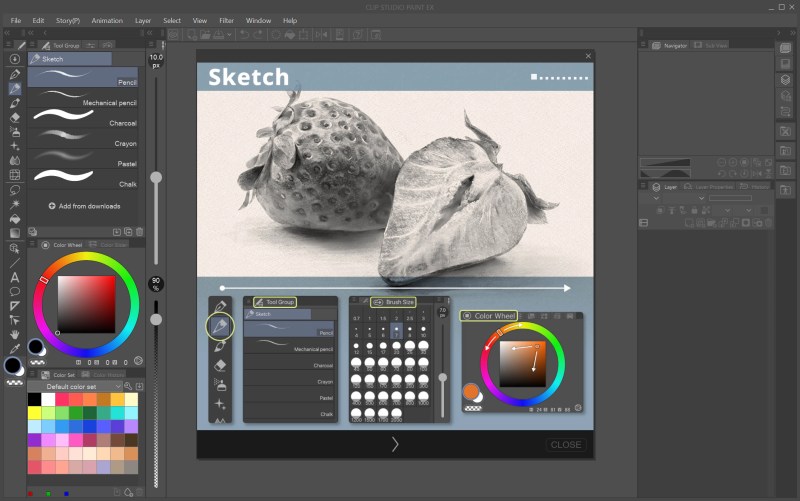
At its core, Clip Studio Paint EX operates on a non-destructive editing model, meaning that every action—from brush strokes to layer adjustments—can be modified or undone without losing quality. This is achieved through its layer-based system, which supports raster, vector, and 3D elements simultaneously. The software’s brush engine is particularly noteworthy, offering over 1,000 pre-installed brushes that can be customized for pressure sensitivity, texture, and flow. Artists can also import third-party brushes, expanding the toolkit further. The animation timeline is another key component, allowing for onion skinning, keyframe interpolation, and cel-based animation, which are essential for traditional and digital animators alike.Table of Contents
- The Complete Overview of Clip Studio Paint EX
- Historical Background and Evolution
- Core Mechanisms: How It Works
- Key Benefits and Crucial Impact
- Major Advantages
- Comparative Analysis
- Future Trends and Innovations
- Conclusion
- Comprehensive FAQs
- Q: Is Clip Studio Paint EX worth the upgrade from the standard version?
- Q: Can I use Clip Studio Paint EX for animation?
- Q: Does Clip Studio Paint EX support cloud collaboration?
- Q: How does the vector layer system compare to Adobe Illustrator?
- Q: Is Clip Studio Paint EX compatible with other 3D software?
- Q: What makes Clip Studio Paint EX better for comics than Photoshop?
- Q: Can I use Clip Studio Paint EX on a tablet?
- Q: Is there a free trial for Clip Studio Paint EX?
- Q: How does Clip Studio Paint EX handle color management for print?
- Q: Can I customize the interface in Clip Studio Paint EX?
The software’s 3D integration is where Clip Studio Paint EX truly sets itself apart. Unlike standalone 3D suites, the EX version embeds a lightweight 3D model viewer directly into the interface. Artists can import FBX or OBJ files, pose characters using a bone rigging system, and even project textures onto 3D surfaces for reference. This hybrid approach eliminates the need for separate 3D software, making it accessible to illustrators who need occasional 3D assistance without the complexity of full 3D pipelines. The vector layers function similarly to Adobe Illustrator’s pen tool but with added flexibility, allowing artists to edit paths and curves directly within the same document as their raster artwork.
Key Benefits and Crucial Impact
The adoption of Clip Studio Paint EX has redefined industry standards for digital art production. Where once artists had to rely on a patchwork of software—Photoshop for illustration, Illustrator for vectors, and Blender for 3D—Clip Studio Paint EX provides a unified solution. This consolidation not only saves time but also reduces the cognitive load of managing multiple applications. For comic artists, the ability to export pages in print-ready formats with adjustable gutters and bleed settings is a game-changer, eliminating the need for post-production adjustments. Animators benefit from the streamlined timeline, which supports both 2D and limited 3D workflows, making it easier to experiment with motion without sacrificing quality.The software’s impact extends beyond individual creators. Studios and publishers increasingly adopt Clip Studio Paint EX for its collaboration features, which include cloud-based file sharing and version control. This is particularly useful for teams working on large-scale projects, where multiple artists may need to contribute to the same file simultaneously. The EX version’s advanced color management also ensures consistency across different devices and printing processes, a critical factor for commercial and editorial work. Ultimately, Clip Studio Paint EX isn’t just a tool—it’s a workflow revolution, designed to empower artists at every stage of production.
"Clip Studio Paint EX doesn’t just keep up with the industry—it sets the pace. The way it integrates 2D and 3D, while maintaining a user-friendly interface, is unmatched in the market. For professionals, it’s not a question of whether they can afford to use it, but whether they can afford not to." — James Tynion IV, Comic Book Writer & Artist
Major Advantages
- All-in-One Workflow: Combines illustration, animation, and vector tools in a single interface, eliminating the need for multiple software licenses.
- 3D-Assisted Illustration: Includes a built-in 3D model viewer with bone rigging, allowing artists to pose characters and use 3D references without switching applications.
- Advanced Vector Layers: Supports scalable vector art with precise control over paths and curves, rivaling Adobe Illustrator’s capabilities.
- AI-Powered Tools: Features like auto-coloring, perspective guides, and smart erasing reduce repetitive tasks, increasing productivity.
- Comic-Specific Features: Includes panel management, speech bubble customization, and print-ready export options tailored for manga and comics.
Comparative Analysis
| Clip Studio Paint EX | Adobe Photoshop + Illustrator + After Effects |
|---|---|
|
|
|
|
|
|
Future Trends and Innovations
The future of Clip Studio Paint EX is likely to focus on further AI integration, particularly in areas like automated background generation and real-time pose correction. As machine learning advances, we can expect tools that predict an artist’s intent—such as auto-completing sketches or suggesting color palettes based on mood. The software may also expand its 3D capabilities, potentially incorporating real-time rendering or physics-based simulations for dynamic effects. Another area of growth is cloud-based collaboration, where multiple artists can work on the same project in real time, with version history and conflict resolution built in.Beyond technical enhancements, Clip Studio Paint EX may see greater adoption in educational institutions, where its streamlined workflow could make digital art more accessible to students. The software’s affordability compared to Adobe’s subscription model also positions it as a strong contender in emerging markets, where artists may lack the budget for multiple licenses. As digital art continues to blur the lines between 2D and 3D, Clip Studio Paint EX is well-positioned to remain at the forefront, offering a hybrid solution that adapts to the evolving needs of creators.

Conclusion
Clip Studio Paint EX is more than just an upgrade—it’s a redefinition of digital art tools. By consolidating illustration, animation, and vector work into a single, intuitive package, it addresses the pain points that have long plagued professionals. The software’s 3D integration, comic-specific features, and AI-assisted workflows make it a standout choice for anyone serious about digital creation. While Adobe’s suite remains dominant in general design, Clip Studio Paint EX carves out its niche by focusing on the unique demands of artists, particularly those in manga, comics, and animation.For creators who value efficiency, precision, and cost-effectiveness, Clip Studio Paint EX offers an unparalleled alternative to traditional workflows. Its ability to grow with the artist—from rough sketches to finalized projects—ensures that it remains relevant as digital art evolves. In an industry where tools can make or break a project, Clip Studio Paint EX isn’t just a choice; it’s a strategic investment in creativity.
Comprehensive FAQs
Q: Is Clip Studio Paint EX worth the upgrade from the standard version?
Yes, if you require 3D models, vector layers, or advanced animation tools. The EX version includes hundreds of additional brushes, higher resolution exports, and comic-specific features like panel management, which are essential for professionals. The standard version is better suited for hobbyists or those on a budget.
Q: Can I use Clip Studio Paint EX for animation?
Absolutely. The EX version supports frame-by-frame animation, onion skinning, and cel-based workflows, making it ideal for both 2D and limited 3D animation. It’s a favorite among indie animators due to its streamlined timeline and non-destructive editing.
Q: Does Clip Studio Paint EX support cloud collaboration?
Yes, the EX version includes cloud-based file sharing and version control, allowing multiple artists to work on the same project simultaneously. This is particularly useful for studios or teams collaborating on large-scale projects.
Q: How does the vector layer system compare to Adobe Illustrator?
Clip Studio Paint EX’s vector layers are fully integrated with raster art, allowing for seamless editing within the same document. While Illustrator offers more advanced vector tools, Clip Studio Paint EX provides a simpler, more artist-friendly approach, especially for those who work primarily in 2D.
Q: Is Clip Studio Paint EX compatible with other 3D software?
Yes, you can import and export 3D models in formats like FBX and OBJ, allowing for integration with Blender, Maya, or ZBrush. The software’s 3D viewer is designed for reference and lightweight posing, not full 3D modeling.
Q: What makes Clip Studio Paint EX better for comics than Photoshop?
Clip Studio Paint EX includes built-in comic tools like panel management, speech bubble customization, and print-ready export options, which are absent in Photoshop. Additionally, its non-destructive workflow ensures that adjustments can be made without losing quality, a critical factor for multi-page comics.
Q: Can I use Clip Studio Paint EX on a tablet?
Yes, the software is fully optimized for pressure-sensitive tablets (e.g., Wacom, Huion) and supports customizable brush settings for different styluses. Many artists prefer it over Photoshop for its manga-specific brushes and smoother stroke handling.
Q: Is there a free trial for Clip Studio Paint EX?
Celsys occasionally offers limited-time free trials or discounts, but the EX version is not permanently free. The standard version has a free trial, but the EX version typically requires purchase. Check the official website for promotions.
Q: How does Clip Studio Paint EX handle color management for print?
The EX version includes advanced color profiles and ICC color management, ensuring consistent colors across digital and print outputs. This is crucial for comic artists and illustrators who need CMYK-ready files for professional printing.
Q: Can I customize the interface in Clip Studio Paint EX?
Yes, the software allows full UI customization, including floating windows, shortcut adjustments, and layout presets. This makes it adaptable to different workflows, whether you’re a comic artist, animator, or illustrator.
Leave a Comment
Comments are moderated before appearing. The data you submit is processed according to the Privacy Policy of Coolearth.