How to Secure and Optimize Your Google Cloud Login
Google Cloud’s login system is the gateway to a suite of enterprise-grade tools, from AI-driven analytics to scalable infrastructure. Behind the seamless interface lies a layered authentication framework designed for both security and usability. Whether you’re an IT administrator provisioning access or an end-user navigating cloud resources, understanding how Google Cloud login functions—and how to optimize it—is critical. The system blends Google’s identity infrastructure with cloud-specific permissions, creating a balance between convenience and control.
For organizations, misconfigured Google Cloud login settings can expose sensitive data or disrupt workflows. Meanwhile, individual users often overlook critical security layers, leaving accounts vulnerable to credential theft. The challenge lies in aligning access policies with operational needs without sacrificing protection. This guide dissects the mechanics, security protocols, and practical applications of Google Cloud login, from initial setup to advanced troubleshooting.
The evolution of Google Cloud login mirrors the broader shift toward identity-centric cloud services. Early adopters relied on basic OAuth integrations, but as cloud ecosystems expanded, Google introduced granular role-based access control (RBAC) and conditional access policies. Today, the system integrates with Google Workspace, third-party identity providers (IdPs), and zero-trust architectures, reflecting a paradigm where authentication is as dynamic as the services it secures.
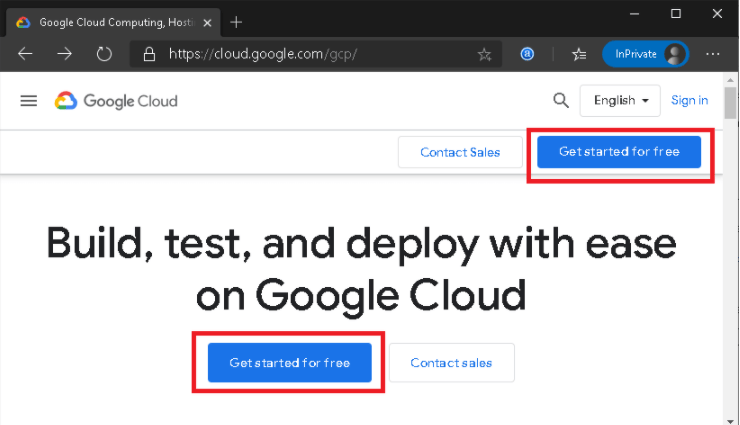
The Complete Overview of Google Cloud Login
At its core, Google Cloud login operates as a hybrid of Google’s identity platform and cloud-specific authorization layers. Users authenticate via Google accounts (personal or Workspace) or external IdPs like Active Directory, while permissions are governed by Google Cloud’s Identity and Access Management (IAM) framework. This dual-layer approach ensures that even if credentials are compromised, an attacker gains only the access explicitly granted by IAM roles—such as "Storage Object Viewer" or "Compute Admin."The system’s flexibility extends to multi-factor authentication (MFA), device context checks, and session management. For example, a developer might access BigQuery via a browser-based Google Cloud login portal, while a data scientist uses CLI tools with OAuth tokens. Underlying these interactions is Google’s global infrastructure, which processes authentication requests in milliseconds while enforcing compliance with standards like SOC 2 and ISO 27001.
Historical Background and Evolution
The origins of Google Cloud login trace back to Google’s 2011 launch of Google Cloud Platform (GCP), which initially inherited authentication from Google Apps (now Workspace). Early versions relied on simple username/password pairs, supplemented by OAuth 2.0 for third-party integrations. However, as cloud adoption surged, so did the need for finer-grained controls. In 2015, Google introduced IAM, a policy-based system that replaced coarse-grained project-level permissions with role-specific access.A pivotal moment arrived in 2018 with the integration of Google Cloud login into Workspace, enabling single sign-on (SSO) across GCP and G Suite services. This unification reduced credential fatigue while allowing admins to enforce consistent security policies. Subsequent updates, such as the 2020 rollout of conditional access rules, further tightened security by restricting logins to compliant devices or locations. Today, the system supports federated identities, allowing enterprises to sync on-premises directories with Google Cloud without manual provisioning.
Core Mechanisms: How It Works
The Google Cloud login process begins with an authentication request, which triggers a sequence of validation steps. For Google Workspace users, this starts with a challenge to the user’s primary email address, followed by password verification. If MFA is enabled, the system prompts for a secondary factor (e.g., a TOTP code or security key). For external IdPs, the request is routed through SAML or OpenID Connect, where the IdP validates credentials before issuing a token to Google Cloud.Table of Contents
- The Complete Overview of Google Cloud Login
- Historical Background and Evolution
- Core Mechanisms: How It Works
- Key Benefits and Crucial Impact
- Major Advantages
- Comparative Analysis
- Future Trends and Innovations
- Conclusion
- Comprehensive FAQs
- Q: Can I use my personal Google account to log in to Google Cloud?
- Q: What happens if I lose access to my Google Cloud login credentials?
- Q: How do I restrict a user’s access to specific Google Cloud resources?
- Q: Is multi-factor authentication (MFA) mandatory for Google Cloud login?
- Q: Can I integrate Google Cloud login with my existing Active Directory?
- Q: How do I monitor failed Google Cloud login attempts?
- Q: What’s the difference between a Google Cloud service account and a user account for login?
- Q: Can I enforce password complexity rules for Google Cloud logins?
- Q: How do I troubleshoot a "403 Permission Denied" error during Google Cloud login?
- Q: What’s the best practice for managing third-party access via Google Cloud login?
Once authenticated, the system evaluates the user’s IAM roles and permissions. These are stored in Google’s global directory service and applied dynamically—meaning a user’s access can change in real-time based on group memberships or time-based policies. For example, a contractor might have temporary "Editor" access to a Cloud Storage bucket that revokes automatically after project completion. Underlying this is Google’s Cloud Audit Logs, which tracks every authentication event for forensic analysis.
Key Benefits and Crucial Impact
The adoption of Google Cloud login has redefined how organizations manage digital identities in hybrid environments. By centralizing authentication, Google eliminates the need for disparate password managers or VPNs, reducing both operational overhead and attack surfaces. For end-users, the integration with familiar Google services—such as Chrome or Android—lowers the barrier to adoption, while for admins, the granularity of IAM policies enables compliance with regulations like GDPR or HIPAA.The system’s scalability is equally compelling. Whether managing 100 users or 100,000, Google Cloud’s infrastructure handles authentication loads with minimal latency. This reliability is backed by enterprise-grade SLAs, ensuring uptime even during peak usage. As cyber threats evolve, the platform’s adaptive security—such as risk-based access controls—provides a proactive defense against phishing or credential stuffing.
"Authentication isn’t just about verifying who you are; it’s about defining what you can do—and in Google Cloud, that definition is as precise as the tools you’re using." — Google Cloud Security Team
Major Advantages
- Unified Identity Management: Consolidates authentication across Google Cloud, Workspace, and third-party apps under a single identity provider, reducing credential sprawl.
- Granular Access Control: IAM roles allow admins to assign permissions at the resource level (e.g., a single folder in Cloud Storage), not just the project level.
- Multi-Layered Security: Supports MFA, device compliance checks, and contextual signals (e.g., unusual login locations) to block suspicious activity.
- Seamless Integration: Works with existing IdPs via SAML/OpenID Connect, enabling hybrid cloud deployments without disrupting legacy systems.
- Audit and Compliance: Cloud Audit Logs provide immutable records of all authentication events, simplifying compliance reporting for auditors.

Comparative Analysis
| Feature | Google Cloud Login | Alternative (AWS IAM) |
|---|---|---|
| Authentication Methods | Google Workspace, SAML, OAuth 2.0, Security Keys | IAM Users/Groups, SAML, Federated Logins |
| Granularity of Permissions | Role-based with customizable scopes (e.g., "BigQuery Data Viewer") | Policy-based with fine-grained resource-level permissions |
| Multi-Factor Options | TOTP, SMS, Security Keys, Biometrics (via Workspace) | TOTP, Hardware Keys, Virtual MFA (via AWS Secrets Manager) |
| Integration Ecosystem | Native Google Workspace, ChromeOS, Android Enterprise | AWS SSO, Active Directory, Third-party IdPs |
Future Trends and Innovations
The next phase of Google Cloud login will likely focus on passwordless authentication and AI-driven risk assessment. Google is already testing biometric verification for Workspace users, while experimental features like "Passkeys" (FIDO2-compliant credentials) aim to eliminate passwords entirely. On the enterprise side, expect deeper integration with BeyondCorp principles, where access is granted based on device health and user context rather than static credentials.Another frontier is automated identity governance, where machine learning analyzes access patterns to flag anomalous behavior—such as a developer suddenly requesting admin privileges. Google’s investment in Confidential Computing may also extend to authentication, ensuring that even the login process occurs in encrypted environments. As quantum computing looms, post-quantum cryptography will become a standard feature of Google Cloud login, future-proofing the system against cryptographic attacks.

Conclusion
The Google Cloud login system represents a convergence of usability and security, tailored for both individual users and global enterprises. Its strength lies in adaptability—whether through federated identities, conditional access, or real-time auditing—it evolves alongside the threats and demands of modern cloud computing. For organizations, the key to leveraging this system lies in balancing automation with oversight: automate routine access requests while maintaining manual review for high-risk actions.As cloud adoption accelerates, the stakes for secure Google Cloud login practices will only rise. By staying informed about updates—such as new MFA options or IAM policy enhancements—admins and users can ensure their access strategies remain both efficient and resilient.
Comprehensive FAQs
Q: Can I use my personal Google account to log in to Google Cloud?
A: Yes, but only if you’re part of a Google Cloud project where personal accounts are explicitly allowed. Most enterprise environments require Google Workspace accounts or federated identities for security and audit purposes. To check, verify your project’s IAM settings under "Identity Sources."
Q: What happens if I lose access to my Google Cloud login credentials?
A: If you’ve lost access to your primary email or password, your Google Workspace admin can reset credentials or grant temporary access via a support ticket. For federated logins, contact your IdP administrator. Google Cloud does not support direct password resets for security reasons.
Q: How do I restrict a user’s access to specific Google Cloud resources?
A: Use IAM roles to assign granular permissions. For example, create a custom role with "roles/storage.objectViewer" for a user who only needs to read Cloud Storage objects. Apply this role at the resource level (e.g., a single bucket) rather than the project level. Conditional access policies can further restrict logins by time, location, or device compliance.
Q: Is multi-factor authentication (MFA) mandatory for Google Cloud login?
A: MFA is strongly recommended for all users with elevated permissions (e.g., "Owner" or "Editor" roles). While Google Cloud does not enforce MFA globally, admins can mandate it via Workspace security settings or conditional access rules. For high-risk environments, Google recommends hardware security keys (e.g., YubiKey) over SMS-based MFA.
Q: Can I integrate Google Cloud login with my existing Active Directory?
A: Yes, using Google Cloud Directory Sync or SAML federation. The latter allows you to configure AD as an IdP, syncing user attributes and groups to Google Cloud. This setup enables SSO while maintaining on-premises identity management. For step-by-step instructions, refer to Google’s SAML documentation.
Q: How do I monitor failed Google Cloud login attempts?
A: Failed login attempts are logged in Cloud Audit Logs under "Authentication" events. Enable Data Access logs in the IAM & Admin console and use tools like Cloud Logging or SIEM integrations (e.g., Splunk) to analyze patterns. For real-time alerts, set up Cloud Monitoring dashboards with thresholds for repeated failures.
Q: What’s the difference between a Google Cloud service account and a user account for login?
A: User accounts authenticate humans via Google Workspace or federated IdPs, while service accounts are automated identities for applications or VMs. Service accounts use long-lived keys (JSON files) for authentication, whereas user logins rely on interactive sessions. Never use user credentials for service account tasks—always generate dedicated keys.
Q: Can I enforce password complexity rules for Google Cloud logins?
A: Password policies are managed through Google Workspace’s security settings, not Google Cloud directly. Admins can enforce minimum length, character types, and expiration periods via the Admin Console under "Security > Passwords." These rules apply to all Google Cloud logins tied to Workspace accounts.
Q: How do I troubleshoot a "403 Permission Denied" error during Google Cloud login?
A: A 403 error typically indicates insufficient IAM permissions. Verify the user’s roles in the IAM console and ensure they’re assigned at the correct resource level (e.g., project vs. folder). Check for inherited permissions via the "Effective Permissions" tool in the Cloud Console. If using custom roles, confirm the role includes the required primitive permissions (e.g., "compute.instances.get").
Q: What’s the best practice for managing third-party access via Google Cloud login?
A: For third-party developers or vendors, use Google Cloud’s IAM Recommender to identify overly permissive roles. Restrict access to the minimal required permissions (e.g., "roles/bigquery.dataViewer") and set expiration dates for temporary roles. Monitor third-party activity via Cloud Audit Logs and consider using Workload Identity Federation to delegate access without sharing long-lived credentials.
Leave a Comment
Comments are moderated before appearing. The data you submit is processed according to the Privacy Policy of Coolearth.