How to Use a Java Compiler Online: The Definitive Guide
Java remains one of the most widely adopted programming languages, powering everything from enterprise applications to Android apps. Yet, for developers working across devices or in collaborative environments, relying on a local Java compiler online can streamline workflows. The ability to compile and test code without installing a full JDK on every machine is a game-changer—especially for beginners or teams with limited resources.
But not all online Java compilers are created equal. Some prioritize speed, others focus on debugging features, and a few offer cloud-based IDEs with built-in version control. The shift toward remote compilation isn’t just about convenience; it’s about accessibility. Imagine writing Java code on a Chromebook, compiling it in the cloud, and instantly sharing the output with a team halfway across the world. That’s the power of a modern online Java compiler.
However, the landscape is fragmented. Free tools may lack advanced features, while paid services could introduce latency or storage limits. The right choice depends on whether you’re debugging complex algorithms, teaching a class, or deploying microservices. This guide cuts through the noise, examining how these tools function, their real-world advantages, and what the future holds for remote Java development.
The Complete Overview of Java Compiler Online
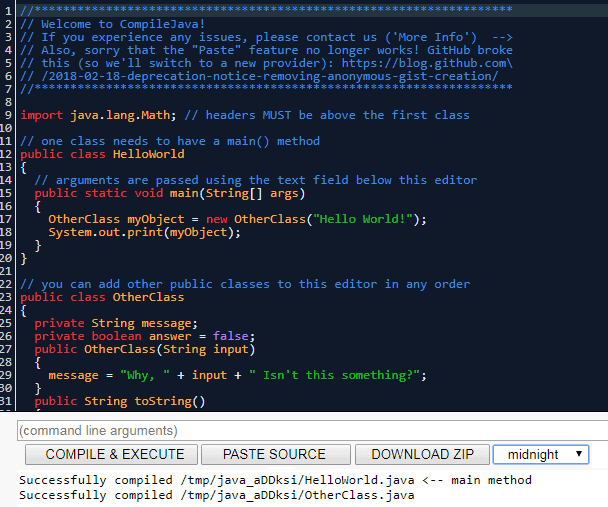
A Java compiler online is a web-based service that translates Java source code into bytecode without requiring a local Java Development Kit (JDK) installation. These platforms abstract the compilation process, offering instant feedback, code execution, and sometimes even integrated development environments (IDEs) in a browser. Their appeal lies in their simplicity: no setup, no configuration, and immediate results.
Behind the scenes, these tools typically rely on cloud-based servers running JDK instances. When you submit code, the platform sends it to a remote machine, compiles it, and returns the output—whether it’s a successful execution, syntax errors, or runtime exceptions. Some advanced online Java compilers even simulate full IDEs, complete with syntax highlighting, autocompletion, and collaborative editing. This makes them particularly useful for educational settings or rapid prototyping.
Historical Background and Evolution
The concept of online code execution traces back to the early 2000s, when platforms like ideone.com and rextester.com emerged to support multiple languages, including Java. These services were initially designed for competitive programmers who needed quick feedback without local toolchain dependencies. Over time, as cloud computing matured, Java compiler online tools evolved to include features like persistent workspaces, version history, and even sandboxed environments for security.
Table of Contents
- The Complete Overview of Java Compiler Online
- Historical Background and Evolution
- Core Mechanisms: How It Works
- Key Benefits and Crucial Impact
- Major Advantages
- Comparative Analysis
- Future Trends and Innovations
- Conclusion
- Comprehensive FAQs
- Q: Can I use a Java compiler online for large-scale projects?
- Q: Are there any security risks when using an online Java compiler?
- Q: Do I need an internet connection to use an offline Java compiler alternative?
- Q: Can I compile Java code with custom libraries using an online compiler?
- Q: What happens if my Java code runs indefinitely in an online compiler?
- Q: Are there any legal restrictions on using online Java compilers?
Today, the market is dominated by both niche players and tech giants. Google’s Replit, for instance, offers a full-fledged online IDE with Java support, while specialized tools like JDoodle focus exclusively on compilation and execution. The rise of remote development—accelerated by the pandemic—has further cemented their role in modern software engineering. Even educational institutions now recommend online Java compilers to lower the barrier for entry into programming.
Core Mechanisms: How It Works
At its core, a Java compiler online follows a three-step process: submission, compilation, and execution. When you paste or upload Java code, the platform’s backend intercepts the request and forwards it to a server running a JDK. The server then invokes the javac compiler, which converts the source code into bytecode (.class files). If compilation succeeds, the bytecode is executed using the Java Virtual Machine (JVM), and the output (console logs, errors, or program results) is streamed back to your browser.
Security is a critical consideration in these systems. Most online Java compilers implement sandboxing to prevent malicious code from accessing the host system. For example, they may restrict file system operations or limit CPU usage per session. Some platforms also enforce timeouts to prevent infinite loops from crashing the server. Behind the scenes, load balancing ensures that multiple users can compile code simultaneously without performance degradation, though free tiers often impose usage limits.
Key Benefits and Crucial Impact
The primary advantage of using a Java compiler online is accessibility. Developers no longer need to install a JDK, configure environment variables, or troubleshoot path issues. This is particularly beneficial for educators teaching Java in classrooms where local installations might be restricted. Additionally, these tools eliminate version conflicts—every user works with the same JDK version, ensuring consistency across submissions.
Beyond convenience, online compilers foster collaboration. Features like shared workspaces and real-time editing allow teams to review and debug code simultaneously, regardless of their physical location. For freelancers or solo developers, the ability to test snippets quickly without cluttering a local machine is a productivity booster. Even seasoned Java engineers use these tools for ad-hoc testing or experimenting with new APIs.
— James Gosling, Creator of Java
"The beauty of Java was always its portability. An online compiler takes that a step further by making the entire development process portable—no matter where you are or what device you’re using."
Major Advantages
- Zero Setup Required: No need to download or configure a JDK; compile Java code directly in a browser.
- Cross-Platform Compatibility: Works on any device with an internet connection, from laptops to tablets.
- Instant Feedback: Syntax errors and runtime exceptions are displayed in real-time, accelerating debugging.
- Collaborative Features: Many platforms support shared sessions, making pair programming or code reviews seamless.
- Educational Value: Ideal for teaching Java fundamentals without the overhead of local installations.

Comparative Analysis
Not all online Java compilers are equal. Some excel in speed, others in feature richness, and a few prioritize security over flexibility. Below is a comparison of four leading tools based on key metrics:
| Platform | Key Features |
|---|---|
Replit |
Full IDE with Java support, collaborative coding, Git integration, and free tier with 5GB storage. |
JDoodle |
Specialized for Java compilation, supports multiple JDK versions, and offers API access for custom integrations. |
OnlineGDB |
Lightweight, fast execution, and includes a debugger for step-by-step analysis of Java programs. |
Programiz |
Beginner-friendly with tutorials, a simple interface, and no account required for basic usage. |
Future Trends and Innovations
The next generation of Java compiler online tools is likely to integrate more tightly with AI-assisted development. Imagine a platform that not only compiles your Java code but also suggests optimizations, detects potential bugs before execution, or even generates boilerplate code based on natural language prompts. Companies like GitHub Copilot are already paving the way for AI-driven coding assistants, and Java-specific tools will follow suit.
Another emerging trend is the convergence of online compilers with containerization. Services like Docker-in-the-browser could allow developers to compile Java code in isolated, ephemeral containers, offering even greater security and reproducibility. Additionally, as edge computing grows, we may see online Java compilers deployed closer to the user’s location, reducing latency for real-time collaboration. The future isn’t just about compiling Java code remotely—it’s about redefining the entire development lifecycle in the cloud.

Conclusion
A Java compiler online is more than just a convenience—it’s a paradigm shift in how developers interact with Java. For beginners, it removes the friction of setup; for professionals, it enhances collaboration and portability. While local JDK installations will always have their place, the rise of cloud-based compilation reflects a broader trend toward accessible, on-demand development tools.
Choosing the right online Java compiler depends on your needs: speed, features, or simplicity. As the technology evolves, these platforms will likely incorporate more AI, better security models, and deeper IDE-like functionality. For now, they remain an essential resource for anyone looking to write, test, and share Java code without boundaries.
Comprehensive FAQs
Q: Can I use a Java compiler online for large-scale projects?
A: Most online Java compilers are designed for small to medium-sized code snippets due to resource limitations. For large projects, a local JDK or cloud-based IDE (like Replit) with persistent storage is recommended. Some platforms offer paid tiers with increased memory or execution time, but they’re not substitutes for full-fledged development environments.
Q: Are there any security risks when using an online Java compiler?
A: While reputable online Java compilers implement sandboxing and input validation, there’s always a theoretical risk of malicious code execution affecting the server. Avoid uploading sensitive or proprietary code. For added security, use platforms with HTTPS encryption and audit their privacy policies before submission.
Q: Do I need an internet connection to use an offline Java compiler alternative?
A: No, but the term is a bit misleading. An "offline Java compiler" typically refers to a locally installed JDK. If you’re asking about tools that mimic online compilation without an internet dependency, options like PortableJDK or containerized JDKs (e.g., Docker) allow you to compile Java code offline. However, these require initial setup and don’t offer the same convenience as a true online Java compiler.
Q: Can I compile Java code with custom libraries using an online compiler?
A: Some online Java compilers, like Replit, support uploading custom JAR files or dependencies. Others restrict you to pre-installed libraries. Check the platform’s documentation for supported external libraries. For complex projects with many dependencies, a local Maven/Gradle setup is still the most reliable approach.
Q: What happens if my Java code runs indefinitely in an online compiler?
A: Most online Java compilers enforce timeouts (typically 5–30 seconds) to prevent infinite loops from consuming server resources. If your code exceeds this limit, the session will terminate, and you’ll receive a timeout error. Optimize your code or break long-running tasks into smaller chunks to avoid this issue.
Q: Are there any legal restrictions on using online Java compilers?
A: Generally, no—most platforms operate under standard terms of service that prohibit illegal activities (e.g., hacking, distributing malware). However, some may have restrictions on commercial use or require attribution for open-source projects. Always review the platform’s policies before uploading proprietary or licensed code.
Leave a Comment
Comments are moderated before appearing. The data you submit is processed according to the Privacy Policy of Coolearth.