How Navy Federal Credit Cards Stack Up: Perks, Pitfalls, and Smart Choices
Navy Federal Credit Union’s financial products have quietly become a cornerstone for millions of service members, veterans, and their families. While lesser-known outside military circles, its navy federal credit cards stand out for their tailored rewards, fee transparency, and deep integration with the credit union’s broader ecosystem. Unlike traditional banks that prioritize profit margins, Navy Federal’s cards are designed with a singular focus: serving those who’ve served. The catch? Access isn’t automatic—membership hinges on eligibility tied to military affiliation, DoD contractors, or family ties. This exclusivity fosters loyalty but limits visibility, leaving many unaware of the card’s full potential.
The navy federal credit cards portfolio spans cash-back options, travel rewards, and even secured cards for rebuilding credit—a rarity in the industry. What sets them apart isn’t just the rewards structure, but the absence of predatory practices. No hidden fees, no arbitrary interest rate hikes, and a customer service model built on human interaction (not AI chatbots). For active-duty personnel, these cards can offset deployment-related expenses; for veterans, they offer a financial lifeline during transitions. Yet, the lack of widespread advertising means misconceptions persist: Are these cards truly "free"? Do the rewards justify the credit union’s niche status? The answers lie in the mechanics—and the fine print.
Critics argue that Navy Federal’s cards cater to a specific demographic, limiting their appeal for civilians. Proponents counter that the credit union’s mission-driven approach yields tangible benefits, from lower interest rates to emergency assistance programs. The debate hinges on one question: If you qualify, should you prioritize a navy federal credit card over mainstream alternatives? The answer depends on your financial goals, spending habits, and whether you value alignment with an institution that shares your values. This analysis cuts through the noise to reveal how these cards function, their competitive edge, and whether they’re worth the membership hassle.

The Complete Overview of Navy Federal Credit Cards
Navy Federal Credit Union’s credit card program operates as a closed-loop system, meaning its offerings are exclusively available to members. This exclusivity isn’t accidental—it’s a strategic choice to maintain a tight-knit community where financial services are tailored to the unique challenges faced by military families. The credit cards themselves are issued by Synchrony Bank (a third-party processor), but the rewards, terms, and customer service are governed by Navy Federal’s internal policies. This hybrid model allows the credit union to offer competitive rates while leveraging Synchrony’s infrastructure for processing and fraud detection. For members, the result is a product that feels both personal and technologically robust.
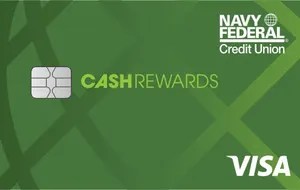
The portfolio includes four primary cards: the Navy Federal Cash Rewards (for everyday spending), the Navy Federal nAviate® Credit Card (travel-focused), the Navy Federal Secured Card (for credit rebuilding), and the Navy Federal Platinum Card (a premium no-frills option). Each is designed to address a distinct financial need, yet they share a common thread: no annual fees, flexible reward structures, and a commitment to ethical lending. The absence of foreign transaction fees on most cards further enhances their appeal for service members deployed overseas or traveling internationally. However, the trade-off is limited acceptance outside the U.S.—a quirk that can catch frequent global travelers off guard.
Historical Background and Evolution
Navy Federal Credit Union traces its origins to 1933, when a group of Navy sailors pooled their resources to create a financial cooperative. Over the decades, it expanded to include Air Force, Marine Corps, and Coast Guard members, as well as Department of Defense employees and their families. The credit union’s growth mirrored the military’s evolution, adapting to serve an increasingly diverse membership base. Credit cards entered the mix in the 1990s, initially as a tool for consolidating debt at lower interest rates than commercial banks offered. By the 2000s, rewards programs were introduced, aligning with the credit union’s mission to provide value beyond basic banking.
Table of Contents
- The Complete Overview of Navy Federal Credit Cards
- Historical Background and Evolution
- Core Mechanisms: How It Works
- Key Benefits and Crucial Impact
- Major Advantages
- Comparative Analysis
- Future Trends and Innovations
- Conclusion
- Comprehensive FAQs
- Q: Can civilians apply for navy federal credit cards?
- Q: Do navy federal credit cards have foreign transaction fees?
- Q: How quickly can I get approved for a navy federal credit card?
- Q: Are there any hidden fees with navy federal credit cards?
- Q: Can I use a navy federal credit card for balance transfers?
- Q: What happens if I lose my navy federal credit card?
- Q: Do navy federal credit cards offer travel insurance?
- Q: Can I earn rewards on purchases made through a military discount portal?
- Q: What’s the difference between the navy federal cash rewards and nAviate® cards?
- Q: How does Navy Federal handle credit limits for service members with irregular income?
- Q: Are navy federal credit cards accepted worldwide?
The modern navy federal credit cards reflect a deliberate shift toward consumer-friendly features. The cash-back and travel cards, launched in the 2010s, were designed to compete with mainstream issuers like Chase and Amex, but with a twist: rewards were structured to benefit military lifestyles. For example, the nAviate® card’s 2x points on travel and dining cater to service members who frequently dine out on base or book last-minute flights for TDY (Temporary Duty) assignments. Meanwhile, the secured card—rare in the industry—offers a path to unsecured credit for those rebuilding after financial setbacks. This evolution underscores Navy Federal’s dual role as both a financial institution and a community resource.
Core Mechanisms: How It Works
At its core, a navy federal credit card functions like any other revolving credit line, but with key differences in eligibility and reward redemption. Membership is non-negotiable: applicants must qualify through military service, family ties, or employment with a participating organization. Once approved, cardholders receive a credit limit based on income, existing debt, and Navy Federal’s internal risk models. Unlike banks that rely on FICO scores alone, Navy Federal often considers alternative data—such as military pay stubs or housing stability—when evaluating applications. This flexibility has helped thousands of service members access credit during periods of irregular income.
Rewards are earned through spending tiers, with points or cash back accruing at varying rates depending on the card. For instance, the Cash Rewards card offers 3% back on gas, dining, and online shopping (up to $1,500 quarterly), 2% on travel, and 1% on everything else. Points are redeemed via the credit union’s portal, where they can be converted to statement credits, gift cards, or even donated to charities. The nAviate® card, meanwhile, uses a travel-specific currency (nAviate® Rewards) that can be applied to flights, hotels, and car rentals through partners like Expedia and Hertz. The system is seamless for members but lacks the flexibility of transferable points found in premium cards like the Chase Sapphire.
Key Benefits and Crucial Impact
The value of navy federal credit cards extends beyond the surface-level rewards. For active-duty personnel, these cards act as a financial buffer during deployments or PCS (Permanent Change of Station) moves, offering grace periods and hardship assistance programs. Veterans benefit from lower interest rates on balance transfers and access to financial counseling services—a critical resource during transitions out of service. Even the secured card, often overlooked, serves as a stepping stone for those with limited credit histories, allowing them to rebuild scores without predatory terms. The cumulative impact is a financial tool that adapts to the unpredictable nature of military life.
Critics point to the credit union’s limited branch network as a drawback, but Navy Federal counters with 24/7 digital access and a robust app that rivals traditional banks. The absence of overdraft fees and the option to opt out of automatic payments further reduce financial stress. For families with multiple members, the ability to consolidate accounts under one credit union streamlines budgeting—a feature often missing in mainstream banking. The real question isn’t whether these cards work, but whether their benefits outweigh the effort required to join. For the right applicant, the answer is a resounding yes.
"Navy Federal doesn’t just offer credit cards; it offers a financial safety net for those who’ve dedicated their lives to serving others. The cards are a reflection of that commitment—designed to support, not exploit."
— Retired Navy Captain and Navy Federal Board Member
Major Advantages
- No Annual Fees: All navy federal credit cards waive annual charges, a rarity in the rewards card space where $95–$550 fees are standard.
- Military-Specific Perks: Features like deployment assistance (e.g., waived late fees for deployed members) and TDY travel protections set them apart from civilian cards.
- Flexible Rewards: Cash-back options are competitive with mainstream cards, while the nAviate® card’s travel rewards include perks like free checked bags and hotel upgrades.
- Credit Building Tools: The secured card reports to all three bureaus, and Navy Federal offers free credit monitoring for members.
- Ethical Lending: The credit union’s not-for-profit status means profits fund community programs, not shareholder dividends.

Comparative Analysis
| Navy Federal Credit Cards | Mainstream Alternatives (e.g., Chase Sapphire, Amex Platinum) |
|---|---|
| Membership Required: Yes (military/DoD ties) | Membership Required: No (open to public) |
| Annual Fees: $0 across all cards | Annual Fees: $95–$695 (varies by card) |
| Rewards Redemption: Statement credits, gift cards, or donations | Rewards Redemption: Flexible (transferable points, travel credits, etc.) |
| Customer Service: Human agents (no phone trees) | Customer Service: Mixed (AI chatbots + human support) |
While mainstream cards offer broader acceptance and transferable points, navy federal credit cards excel in transparency and mission alignment. The trade-off is access: civilians won’t qualify, and even eligible members must navigate the application process. For those who meet the criteria, the benefits often outweigh the limitations.
Future Trends and Innovations
The next frontier for navy federal credit cards lies in AI-driven personalization and expanded partnerships. Navy Federal is quietly investing in predictive analytics to tailor rewards in real-time—for example, boosting cash-back rates for members nearing a PCS move or adjusting credit limits during deployment cycles. Additionally, collaborations with military-focused brands (e.g., USAA, military discount retailers) could introduce exclusive perks, such as extended warranties or travel insurance. The credit union is also exploring blockchain for secure identity verification, a critical feature for members with frequent address changes. These innovations will likely keep Navy Federal ahead of traditional banks in serving its niche audience.
Long-term, the biggest challenge may be balancing growth with exclusivity. As more veterans and contractors join, the credit union risks diluting its core mission. However, its focus on ethical lending and community impact suggests it will prioritize substance over scale. For cardholders, this means continued access to products that genuinely reflect their values—not just their spending habits.
Conclusion
The navy federal credit cards are more than plastic and points; they’re a testament to the credit union’s philosophy that financial services should serve people, not profits. For military families, they offer a rare combination of rewards, security, and alignment with their lifestyle. The lack of annual fees, deployment protections, and credit-building tools make them a standout choice—provided you qualify. Civilians may find the exclusivity frustrating, but the cards’ strengths lie in their specificity. In an era where banks prioritize shareholder returns over customer loyalty, Navy Federal’s approach feels refreshingly human. Whether you’re an active-duty service member or a veteran navigating civilian life, these cards are worth serious consideration—if you can get in.
For those on the fence, the key is to weigh the tangible benefits against the membership hurdle. If your financial goals align with Navy Federal’s values, the effort to join is minimal compared to the long-term rewards. And in a financial landscape where "no strings attached" is a myth, the credit union’s transparency is a breath of fresh air. The question isn’t whether these cards are good—it’s whether they’re right for you.
Comprehensive FAQs
Q: Can civilians apply for navy federal credit cards?
A: No. Membership is restricted to active/discharged military, DoD employees, family members of eligible patrons, and certain contractors. There’s no public application process—you must first join Navy Federal Credit Union.
Q: Do navy federal credit cards have foreign transaction fees?
A: Most do not, but the Navy Federal Platinum Card includes a 3% fee on international purchases. Always check the card’s terms before traveling abroad.
Q: How quickly can I get approved for a navy federal credit card?
A: Approval times vary, but pre-qualification through the Navy Federal app can yield instant decisions. Traditional applications may take 7–10 business days, especially for secured cards.
Q: Are there any hidden fees with navy federal credit cards?
A: No. The credit union waives annual fees, late fees (for deployed members), and foreign transaction fees (on most cards). Even cash advance fees are lower than industry averages.
Q: Can I use a navy federal credit card for balance transfers?
A: Yes, but only if the card offers a 0% APR promotional period. The Navy Federal Cash Rewards card occasionally runs promotions (e.g., 12 months at 0% APR), but terms vary. Always compare with transfer fees (typically 3%).
Q: What happens if I lose my navy federal credit card?
A: Report it immediately via the app or customer service (24/7). Navy Federal offers $0 fraud liability and will issue a replacement quickly. For deployed members, they may ship a temporary card to your duty station.
Q: Do navy federal credit cards offer travel insurance?
A: The nAviate® Credit Card includes primary rental car insurance, trip cancellation/interruption coverage (up to $5,000), and baggage delay insurance. Other cards lack these perks, so check the specific terms.
Q: Can I earn rewards on purchases made through a military discount portal?
A: It depends. Navy Federal partners with some portals (e.g., MilitaryShops.com) to allow rewards earning, but others may void eligibility. Always verify with customer service before booking.
Q: What’s the difference between the navy federal cash rewards and nAviate® cards?
A: The Cash Rewards card is best for everyday spending (3% back on gas/dining), while the nAviate® card focuses on travel (2x points on flights, hotels, and dining). The nAviate® also includes travel protections like trip delay insurance.
Q: How does Navy Federal handle credit limits for service members with irregular income?
A: Unlike banks that rely solely on FICO scores, Navy Federal considers military pay structures, housing stability, and deployment schedules when setting limits. They often approve higher limits for active-duty members with stable housing (e.g., on-base housing).
Q: Are navy federal credit cards accepted worldwide?
A: Yes, but some merchants (especially small businesses or international vendors) may not process Visa/Mastercard transactions. For high-risk areas, notify Navy Federal in advance to avoid declines.
Leave a Comment
Comments are moderated before appearing. The data you submit is processed according to the Privacy Policy of Coolearth.