Mastering SQL Query Examples: The Definitive Playbook for Data Manipulation
Structured Query Language (SQL) remains the backbone of modern data infrastructure, yet its true power lies in execution—not just syntax memorization. The most effective developers don’t just write queries; they architect solutions. Whether you’re extracting customer insights from a retail database or optimizing a financial transaction log, the right SQL query examples can transform raw data into actionable intelligence. These aren’t theoretical exercises; they’re battle-tested patterns that solve real problems at scale.
The art of crafting SQL queries demands more than syntax knowledge. It requires an understanding of how databases think—how indexes accelerate searches, how joins stitch together fragmented data, and how aggregations reveal hidden trends. The examples that follow aren’t just code snippets; they’re blueprints for efficiency, security, and scalability. From filtering millions of records in milliseconds to securing sensitive data with parameterized queries, each technique serves a specific purpose in production environments.
Mastery begins with curiosity. Why does this query run in 200ms instead of 20 seconds? How can a single window function replace a self-join? What’s the difference between a CTE and a temporary table? These questions separate junior developers from architects. Below, we dissect the mechanics, compare approaches, and peer into the future of SQL—because the language itself is evolving faster than most realize.
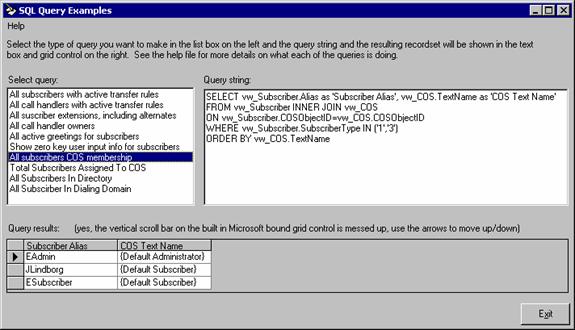
The Complete Overview of SQL Query Examples
SQL query examples serve as the practical manifestation of database theory, bridging abstract concepts with tangible results. At their core, these examples demonstrate how to interact with relational data—whether retrieving, modifying, or analyzing it. The most valuable queries aren’t the simplest; they’re the ones that solve complex problems with minimal computational overhead. For instance, a well-optimized `JOIN` can merge tables with millions of rows without triggering performance bottlenecks, while a poorly written subquery might force the database engine to perform unnecessary nested scans.The real-world applications of SQL query examples span industries. In e-commerce, queries calculate real-time inventory levels and customer lifetime value. In healthcare, they secure patient data while enabling predictive analytics. Even in IoT systems, SQL powers the aggregation of sensor data into actionable insights. The examples provided here aren’t just academic; they reflect patterns used in Fortune 500 databases, open-source projects, and startup MVPs alike. The goal isn’t to memorize syntax but to recognize when and how to apply each technique.
Historical Background and Evolution
SQL emerged in the 1970s as a response to the limitations of earlier data management systems, which relied on navigational access methods like CODASYL. The original design, spearheaded by Donald D. Chamberlin and Raymond F. Boyce at IBM, introduced a declarative approach—users described what they wanted, not how to retrieve it. This abstraction revolutionized database interactions, allowing non-technical users to query structured data without understanding physical storage mechanisms.The evolution of SQL query examples mirrors the growth of computing itself. Early implementations in the 1980s focused on basic CRUD operations (`SELECT`, `INSERT`, `UPDATE`, `DELETE`), but as databases scaled, so did the complexity of queries. The 1990s introduced transaction control (`COMMIT`, `ROLLBACK`) and stored procedures, enabling multi-step operations. Today, modern SQL dialects (PostgreSQL, MySQL, SQL Server) support JSON handling, recursive queries, and machine learning integrations—features unimaginable in the language’s infancy. Each advancement reflects a shift from simple data retrieval to sophisticated analytics and automation.
Core Mechanisms: How It Works
Under the hood, SQL query examples rely on two fundamental processes: parsing and execution. When a query is submitted, the database engine first parses it into a syntax tree, validating structure before translating it into an optimized execution plan. This plan determines how data is retrieved—whether via index scans, hash joins, or nested loops—balancing speed against resource usage. For example, a query with a `WHERE` clause on an indexed column will leverage that index, while an unindexed filter may trigger a full table scan, drastically increasing latency.Table of Contents
- The Complete Overview of SQL Query Examples
- Historical Background and Evolution
- Core Mechanisms: How It Works
- Key Benefits and Crucial Impact
- Major Advantages
- Comparative Analysis
- Future Trends and Innovations
- Conclusion
- Comprehensive FAQs
- Q: How do I optimize a slow-running SQL query?
- Q: What’s the difference between a CTE and a temporary table?
- Q: Can SQL handle unstructured data like JSON?
- Q: Why does my JOIN return duplicate rows?
- Q: How do I secure sensitive data in SQL queries?
- Q: What’s the best way to learn advanced SQL query examples?
The choice of query structure directly impacts performance. A `JOIN` operation, for instance, can be optimized using different algorithms (e.g., merge join for sorted data, hash join for large datasets). Similarly, window functions like `ROW_NUMBER()` or `RANK()` avoid self-joins by operating within a single pass over the data. Understanding these mechanics allows developers to write queries that not only work but perform—a critical distinction in systems handling terabytes of data.
Key Benefits and Crucial Impact
SQL query examples aren’t just tools; they’re enablers of efficiency, security, and scalability in data-driven environments. The ability to filter, aggregate, and relate data with precision reduces manual errors and accelerates decision-making. For businesses, this translates to cost savings—optimized queries cut server loads, while secure queries prevent breaches. In scientific research, SQL queries correlate vast datasets to uncover patterns invisible to human analysis. The impact extends beyond IT; it’s a language that democratizes data access, allowing analysts, engineers, and executives to collaborate on the same foundation.The versatility of SQL query examples ensures their relevance across domains. A query that calculates sales trends in retail can be repurposed to track patient recovery rates in healthcare. The syntax remains consistent, but the context adapts. This adaptability, combined with performance optimizations, makes SQL the most widely used query language in the world—despite alternatives like NoSQL gaining traction for specific use cases.
"SQL isn’t just a language; it’s a contract between the database and the user—a promise that the right data will be returned, efficiently, every time." — Joe Celko, Database Architect
Major Advantages
- Performance Optimization: Well-structured queries leverage indexes, caching, and execution plans to minimize latency. For example, replacing a `NOT IN` subquery with `LEFT JOIN ... IS NULL` can reduce execution time from seconds to milliseconds.
- Data Integrity: Constraints (`PRIMARY KEY`, `FOREIGN KEY`, `CHECK`) and transactions (`BEGIN`, `COMMIT`) ensure consistency, preventing anomalies like duplicate records or partial updates.
- Scalability: SQL handles everything from small embedded databases to distributed systems like Google Spanner. Partitioning and sharding strategies rely on query design to maintain performance at scale.
- Security: Parameterized queries (`PREPARE`/`EXECUTE`) and row-level security (RLS) protect against SQL injection and unauthorized access, critical for compliance (GDPR, HIPAA).
- Interoperability: SQL’s standardization allows queries to run across vendors (Oracle, PostgreSQL, SQL Server) with minimal adjustments, reducing vendor lock-in.

Comparative Analysis
| Query Type | Use Case |
|---|---|
| Basic SELECT `SELECT column1, column2 FROM table WHERE condition;` |
Retrieving specific records (e.g., customer orders from 2023). Ideal for read-heavy applications. |
| JOINs (INNER/LEFT/RIGHT) `SELECT a., b. FROM table_a JOIN table_b ON a.id = b.id;` |
Combining data from multiple tables (e.g., merging orders with customer details). Critical for relational integrity. |
| Subqueries `SELECT FROM products WHERE price > (SELECT AVG(price) FROM products);` |
Nested conditions (e.g., finding products priced above average). Useful for hierarchical data. |
| Window Functions `SELECT user_id, revenue, RANK() OVER (PARTITION BY region ORDER BY revenue DESC);` |
Analytical operations (e.g., ranking sales by region). Replaces complex self-joins. |
Future Trends and Innovations
The next decade of SQL query examples will be shaped by two forces: the explosion of unstructured data and the demand for real-time processing. Traditional SQL, optimized for structured tables, is evolving to handle JSON, arrays, and semi-structured formats natively (e.g., PostgreSQL’s JSONB, MySQL’s `JSON_TABLE`). Simultaneously, extensions like window functions and CTEs are being augmented with machine learning—imagine a `PREDICT` clause that integrates with scikit-learn models directly in SQL.Another frontier is query federation, where SQL acts as a universal interface across databases, APIs, and even cloud services. Tools like Presto and Apache Druid already blur the lines between SQL and big data, while edge computing will demand lightweight SQL variants for IoT devices. The language’s adaptability ensures its survival, but the challenge lies in balancing backward compatibility with innovation—especially as quantum computing begins to reshape data processing paradigms.

Conclusion
SQL query examples remain the most direct path to unlocking data’s potential, but their value lies in application—not just syntax. The queries that matter aren’t the ones you memorize but the ones you adapt to solve specific problems. Whether you’re debugging a slow query, designing a data warehouse, or securing sensitive information, the principles outlined here provide a framework for success.The future of SQL isn’t about replacing it with newer tools but about expanding its capabilities. As data grows more complex and systems more distributed, the need for precise, efficient queries will only intensify. The developers who thrive will be those who treat SQL not as a static language but as a dynamic toolkit—constantly evolving to meet the challenges of tomorrow’s data landscape.
Comprehensive FAQs
Q: How do I optimize a slow-running SQL query?
Start by analyzing the execution plan (using `EXPLAIN` in PostgreSQL or `EXPLAIN ANALYZE` in MySQL). Look for full table scans, missing indexes, or inefficient joins. Add indexes on frequently filtered columns, rewrite subqueries as joins, and limit the data retrieved with `SELECT *` (only fetch necessary columns). For complex queries, consider materialized views or query hints (vendor-specific).
Q: What’s the difference between a CTE and a temporary table?
A Common Table Expression (CTE) is a temporary result set defined within a single query (using `WITH`), while a temporary table exists as a physical table in the database (created with `CREATE TEMP TABLE`). CTEs are ephemeral and scoped to the query, making them ideal for readability in complex operations. Temporary tables persist longer and can be reused across sessions, but they consume more resources.
Q: Can SQL handle unstructured data like JSON?
Yes, modern SQL databases support JSON natively. PostgreSQL’s `JSONB` type, MySQL’s `JSON` functions, and SQL Server’s `OPENJSON` allow querying nested structures without schema rigidity. For example, you can extract values from a JSON array with:
SELECT data->>'$.user.name' FROM logs WHERE data->>'$.status' = 'active';
This flexibility bridges relational and NoSQL paradigms.
Q: Why does my JOIN return duplicate rows?
Duplicates in joins typically occur when the join condition matches multiple rows in one or both tables. For example, an `INNER JOIN` on a non-unique column (like a many-to-many relationship) will produce a Cartesian product. Use `DISTINCT` to filter duplicates or review your join logic. Alternatively, check for null values or implicit conversions causing unintended matches.
Q: How do I secure sensitive data in SQL queries?
Never concatenate user input into queries (risk of SQL injection). Use parameterized queries (prepared statements) instead:
PREPARE stmt FROM 'SELECT FROM users WHERE id = ?'; EXECUTE stmt USING @user_id;
Additionally, implement row-level security (RLS) in PostgreSQL or SQL Server to restrict data access by user roles. Encrypt sensitive columns at rest and use column-level permissions to limit exposure.
Q: What’s the best way to learn advanced SQL query examples?
Combine hands-on practice with real datasets (e.g., Kaggle, Google BigQuery public tables) and study execution plans. Focus on one advanced topic at a time (e.g., window functions, recursive CTEs) and compare performance across databases. Books like SQL Performance Explained by Markus Winand and interactive platforms like LeetCode’s SQL problems provide structured learning paths.
Leave a Comment
Comments are moderated before appearing. The data you submit is processed according to the Privacy Policy of Coolearth.