Tag
cryptography
-

The Quick Brown Fox: Linguistic Marvel, Cultural Icon, and Digital Enigma
What makes "the quick brown fox" endure? Partly, it’s the elegance of its structure—a sentence that reads naturally while serving as a functional tool. Unlike...
-

Decoding what is s: The Hidden Language Shaping Tech, Culture & Identity
Yet what is s remains an open question for many. In programming, it’s the prefix for secure protocols (SSH, SSL/TLS). In cryptocurrency, it’s the shorthand for...
-

How the Chinese Remainder Theorem Solves Math’s Most Elegant Puzzles
What makes the Chinese Remainder Theorem (CRT) truly remarkable is its dual nature. It’s both a theoretical masterpiece—a bridge between number theory and...
-
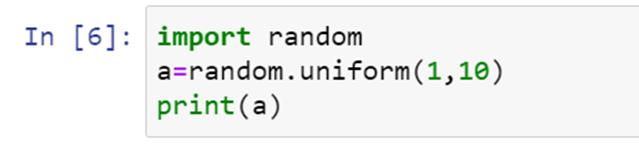
How Python’s Random Number Generation Shapes Modern Tech
Python’s ability to generate random numbers isn’t just a convenience—it’s the backbone of algorithms that power everything from cryptographic security to AI...
-

The Hidden Math Behind 81: Why Its Factors Matter More Than You Think
The number 81 is a square of 9, a cube of 3, and a product of primes in ways that defy superficial observation. Its divisors —the numbers that split it...
-

Why 6 times 7 is the hidden math code shaping science, culture, and daily life
At first glance, 6 × 7 seems like an arbitrary pairing among the 100 possible single-digit multiplications. Yet its placement in the multiplication...
-

The Hidden Math Behind Factors of 40 and Why It Matters
The number 40 is more than a biblical reference or a meteorological benchmark—it’s a mathematical puzzle with layers of significance. Its factors of 40 reveal...
-

How Fermat’s Little Theorem Unlocked Modern Cryptography
The theorem’s beauty lies in its paradox—what appears trivial in hindsight was revolutionary in its time. Fermat himself never published a proof, leaving...
-

Is 1 Prime? The Shocking Truth Behind Math’s Most Divisive Number
The number 1 has haunted mathematicians for centuries—not because it’s complicated, but because it refuses to fit neatly into the categories we’ve built around...
-

Why Understanding the Factors of 32 Reveals Hidden Math, Tech, and Science Secrets
At first glance, the factors of 32 might seem like a basic arithmetic exercise, but their implications extend far beyond classroom exercises. For instance, in...
-

How the Factors of 36 Unlock Hidden Patterns in Math, Science, and Culture
What makes 36 particularly fascinating is its dual nature: a composite number with an unusual abundance of factors (more than any number below it except 24 and...
-

The Hidden Mathematics Behind Factors of 46: From Theory to Real-World Applications
At first glance, 46 might seem unremarkable, but its mathematical properties ripple across disciplines. In algebra, the factors of 46 (2, 23) illustrate the...
-

The Hidden Power of One-to-One Function in Modern Systems
At its core, the one-to-one function (or injective function) enforces a strict rule: no two distinct inputs can yield the same output. This constraint, while...
-

How Directed Acyclic Graphs Are Reshaping Data, Tech, and Real-World Systems
What makes the directed acyclic graph truly revolutionary is its ability to model real-world systems where causality matters. Unlike traditional trees or...
-

How Python’s Random Number Generator Rewrote Probability in Code
The `random number generator python` ecosystem extends beyond the standard library. Libraries like NumPy and SciPy offer specialized generators tailored for...
-

Unlocking Secrets: Navigating the Azure Key Vault Landscape
In the realm of cloud computing, data security is paramount. As organizations increasingly rely on the cloud for their operations, the need for robust key...
-

How Permutations and Combinations Reshape Decision-Making, Probability, and Real-World Strategy
The moment you shuffle a deck of cards, arrange a playlist, or calculate the odds of winning a lottery, you’re engaging with permutations and...
-

The Uncracked Code: Why P vs NP Still Defines Modern Math
The stakes couldn’t be higher. A proof that P does not equal NP would mean some problems are fundamentally unsolvable in any practical sense, forcing us to...
-

How the Product in Math Shapes Logic, Finance, and AI
Yet its influence extends far beyond practical utility. Multiplication is a linguistic construct—one that shapes how we think about growth, scaling, and...